
Types of Hair for Professional Wig and Toupee Making
Wigsy Lab
1/26/20263 min read
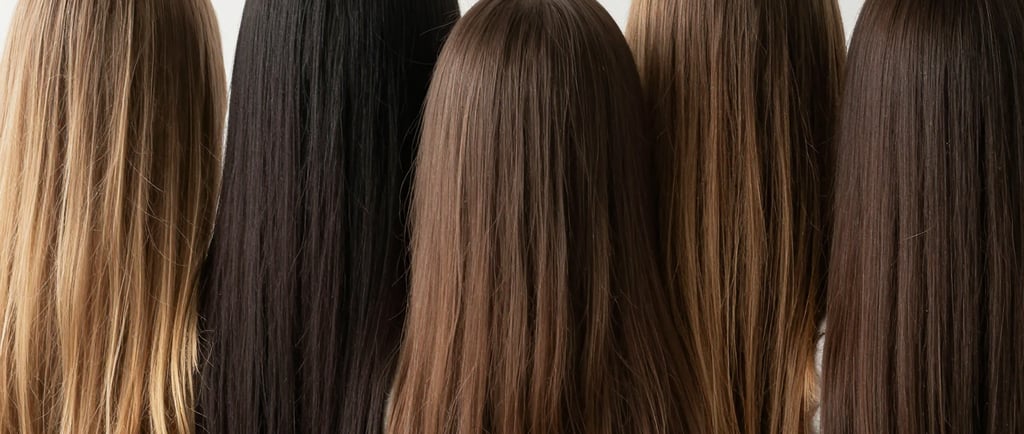
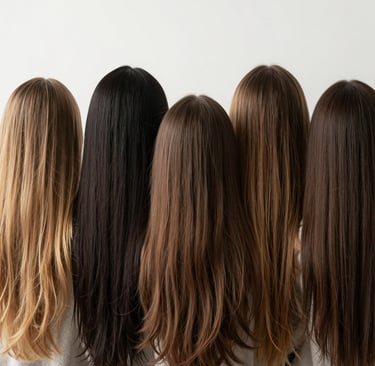
In the professional world of wig and toupee production, several clearly defined types of hair are used, classified according to origin, collection method, level of processing, and intended use. Choosing the right type of hair directly affects the natural appearance, durability, styling possibilities, and maintenance requirements of wigs and toupees. A thorough understanding of these differences is essential for achieving professional-quality results.
Natural human hair is considered the highest-quality material for making wigs and toupees. The most valuable type is Remy hair, in which all cuticles are preserved and aligned in the same direction, from root to tip. This alignment prevents tangling, maintains natural shine, and ensures long-term softness and manageability. Remy hair can be of Indian, European, Slavic, or Asian origin, with differences reflected in strand thickness, density, and natural movement. High-end wigs and toupees are made exclusively from Remy hair, often in Virgin quality, meaning the hair has not been chemically processed. Such hair offers the most natural appearance and the longest lifespan, but it is also the most expensive.
Non-Remy hair is also used in wig and toupee production, primarily for more affordable, mass-market products. In this case, the cuticles are not aligned because the hair is collected from multiple sources, such as floors or brushes. To prevent tangling, the hair undergoes acid processing, during which the cuticle is partially or fully removed, followed by a heavy silicone coating. While this hair may initially appear very shiny and smooth, the silicone gradually washes off, leading to dryness, tangling, and reduced longevity. This type of hair is typically used for short-term wigs and toupees.
Indian hair is one of the most commonly used types in wig and toupee production due to its versatility and durability. It has medium strand thickness, natural volume, and responds well to chemical processing, making it easy to adapt to different colors and styles. Indian hair is widely used in mid- to high-quality wigs and toupees, offering an excellent balance between price, quality, and durability. Properly processed Indian Remy hair can look very natural and maintain its performance over time.
European hair is highly prized in the wig and toupee industry for its exceptional quality, softness, and natural elegance. It features fine, silky strands that fall beautifully and blend seamlessly with the wearer’s own hair, creating an effortlessly natural look. One of its most remarkable qualities is its consistent shine, which remains vibrant even after repeated washing and styling. European hair is lightweight yet durable, making it perfect for toupees and wigs where realism and comfort are essential. Its luxurious texture and timeless brilliance make it the top choice for high-end, handcrafted wigs, offering unmatched beauty and sophistication.
Slavic hair is considered the highest-grade raw material for luxury wigs and toupees. Its exceptionally fine texture, natural shine, and naturally light shades allow for the creation of wigs that closely resemble natural hair. Slavic hair has a long lifespan, minimal tangling, and requires the least amount of chemical processing. It is most commonly used in handmade wigs with ultra-thin lace or mesh bases, where realism is the top priority.
Asian hair, primarily Vietnamese, Chinese, and Mongolian, is used in wig production because of its strength and high density. In its natural state, it is very dark, straight, and thick, making it less suitable for the European market without processing. After intensive chemical treatments, this hair is often marketed under commercial names such as “Brazilian” or “Peruvian.” It is extremely durable and well suited for wigs that are frequently heat-styled, but if not properly refined, it can appear heavier and less natural.
In addition to human hair, synthetic hair is also used in the production of wigs and toupees. Made from specialized heat-resistant fibers, synthetic hair retains its style, is unaffected by humidity, and requires minimal maintenance. However, it cannot fully replicate the natural movement, versatility, and realism of human hair. Synthetic fibers are most commonly used for fashion wigs, theatrical purposes, or as a budget-friendly alternative for everyday wear.
In professional wig and toupee manufacturing, the quality of the final product depends not only on the type of hair but also on the ventilation technique, base construction, and proper aftercare. Selecting the appropriate hair type according to the intended use and the wearer’s needs is essential for achieving long-lasting comfort, durability, and a natural appearance.
Conclusion:
Choosing the right type of hair is the cornerstone of creating high-quality wigs and toupees. Each hair type—whether Remy, non-Remy, Indian, European, Slavic, Asian, or synthetic—offers unique characteristics that affect appearance, durability, and styling possibilities. A deep understanding of these differences, combined with proper base construction, ventilation techniques, and aftercare, ensures that the final product is comfortable, long-lasting, and as natural-looking as possible. By selecting hair that aligns with the wearer’s needs and the intended purpose, professionals can achieve exceptional results that satisfy both aesthetic and functional demands.
© 2026. Wigsy Lab. All rights reserved.
All text and images on this page are the property of Wigsy Lab. Any unauthorized copying, use, or distribution without prior written consent is strictly prohibited, and any infringement will be legally pursued in accordance with the law.